

Omnichannel is more than just being everywhere
A lot of people talk about omnichannel as simply being present on every channel your customers might use – email, social media, your website, a physical store. But that’s really just multichannel. True omnichannel is something different, and frankly, much more difficult to achieve. It’s about creating a unified customer experience, regardless of where the interaction happens.
The core of this unity isn’t the channels themselves, but what happens behind them. It requires deep data integration, so you actually know who your customer is and what they’ve done, no matter which touchpoint they’re using. Consistent messaging is also vital; the tone and information should feel seamless. Finally, a unified customer profile is essential, giving every team member a comprehensive view of the customer's history and preferences.
I often see companies invest heavily in adding more channels without solving these underlying issues. They end up with a fragmented experience where customers have to repeat themselves, and the business doesn’t have a complete picture of their needs. This isn't helpful for anyone. It’s why so many "omnichannel’ initiatives fall flat – they"re built on a flawed foundation.
The promise of omnichannel is a frictionless experience that builds loyalty and drives revenue. But realizing that promise requires a fundamental shift in how businesses think about customer data and experience design. It’s not about being everywhere; it’s about being connected everywhere.
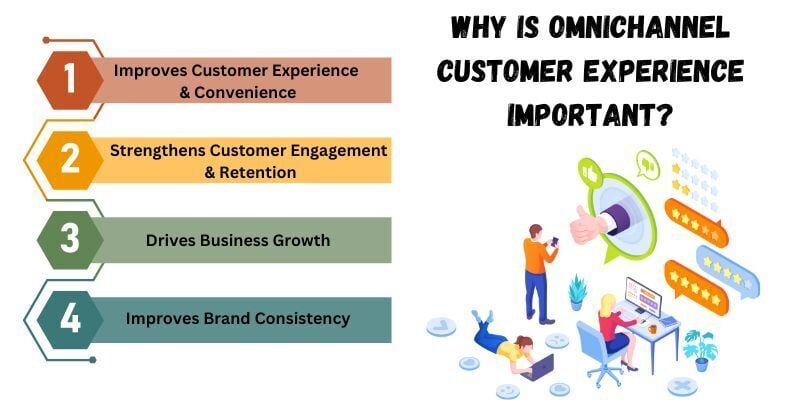
How CX changes by 2026
Looking ahead to 2026, the customer experience landscape is going to be dramatically shaped by advancements in artificial intelligence, particularly generative AI. The demand for personalization will only intensify, and customers will expect businesses to anticipate their needs before they even articulate them. This isn't about just using a customer's name in an email anymore.
We’re already seeing the rise of proactive customer service, powered by AI. Instead of waiting for customers to contact support, businesses will be able to identify potential issues and reach out with solutions. This requires real-time data analysis and the ability to predict customer behavior. Think of a shipping company proactively offering a refund for a delayed package before the customer even notices.
CE 65 has been heavily focused on AI-powered customer experience analytics, and we believe this will be a defining factor for success in the coming years. Our work shows companies can improve customer retention by 15-20% by leveraging predictive analytics to personalize interactions. That’s a significant impact.
Another key shift will be the increasing importance of data privacy and security. Customers are becoming more aware of how their data is being used, and they’re demanding more control. Businesses will need to be transparent about their data practices and prioritize data security to maintain trust. This will require robust data governance policies and a commitment to ethical AI.
CE 65’s Integrated Omnichannel Platform
We built CE 65 as a single platform rather than a bundle of disconnected tools. It handles the messy work of syncing data, mapping out where customers go, and automating the repetitive stuff so your team doesn't have to.
Our customer data integration component solves the problem of data silos. It connects data from all your sources – CRM, marketing automation, e-commerce, support tickets – into a single, unified customer profile. This allows you to get a 360-degree view of each customer, regardless of how they interact with your business.
Journey orchestration is where you design and automate the customer experience. You can segment your audience, personalize messaging, and trigger actions based on customer behavior. For example, automatically sending a targeted email to customers who abandon their shopping cart. This is all done through a visual, drag-and-drop interface.
Analytics and reporting provide the insights you need to measure your success. We offer a range of dashboards and reports that track key metrics like customer satisfaction, conversion rates, and customer lifetime value. The goal is to not just collect data, but to turn it into actionable intelligence. Finally, our automation capabilities streamline processes and free up your team to focus on higher-value tasks.
The data silo problem
Omnichannel initiatives absolutely depend on having a single, accurate view of the customer. Without it, you’re essentially flying blind. The biggest obstacle to achieving this is data silos – when customer data is scattered across different systems and departments. It’s a common problem, and it’s incredibly frustrating for both customers and employees.
CE 65 addresses this challenge with a powerful data integration engine. We offer pre-built connectors to many popular CRM, marketing automation, and e-commerce platforms, including Salesforce, HubSpot, and Shopify. We also provide APIs for connecting to custom systems. The goal is to make it easy to bring all your data together in one place.
Beyond simply connecting the data, we also focus on data quality and governance. This includes data cleansing, deduplication, and standardization. It’s crucial to ensure that your data is accurate and reliable. A unified customer profile is worthless if it contains incorrect or outdated information.
The result of successful data integration is a drastically improved customer experience. You can personalize interactions with greater accuracy, provide more efficient customer service, and identify new opportunities for growth. It’s the bedrock of any effective omnichannel strategy.
Data Integration Approaches for Omnichannel Customer Experience Management
| Integration Approach | Cost | Complexity | Scalability | Real-time Capability |
|---|---|---|---|---|
| Extract, Transform, Load (ETL) | Generally moderate; can increase with data volume and transformation needs. | Moderate to High; requires significant upfront design and development. | Good, but can be limited by batch processing frequency. | Typically batch-oriented; limited real-time support. |
| Extract, Load, Transform (ELT) | Potentially lower initial cost, leveraging cloud data warehouse resources. | Moderate; shifts transformation logic to the data warehouse. | Excellent; designed for large data volumes and cloud scalability. | Better than ETL, but still often relies on micro-batches rather than true real-time. |
| Data Virtualization | Moderate to High; licensing costs can be significant. | High; requires expertise in data modeling and virtualization technologies. | Excellent; provides a unified view of data without physical movement. | Good; can provide near real-time access to data, but performance depends on underlying data sources. |
| Change Data Capture (CDC) | Moderate; implementation and maintenance costs should be considered. | Moderate to High; requires careful planning and monitoring. | Good; designed to handle continuous data streams. | Excellent; provides real-time data replication and synchronization. |
| API-led Integration | Variable; depends on the number and complexity of APIs. | Moderate; requires API design and management expertise. | Good; can be scaled by adding more API instances. | Good; APIs can provide real-time data access. |
| Data Fabric | High; typically involves significant investment in technology and expertise. | Very High; requires a comprehensive understanding of data architecture and governance. | Excellent; designed for highly scalable and distributed data environments. | Excellent; supports real-time data access and integration across diverse sources. |
Illustrative comparison based on the article research brief. Verify current pricing, limits, and product details in the official docs before relying on it.
Journey Orchestration: Guiding Customers Seamlessly
Once you have a unified view of your customer, you can start to design and orchestrate personalized journeys across all channels. CE 65’s journey orchestration capabilities allow you to map out the customer lifecycle and create targeted experiences for each stage. This involves segmentation, personalization, and the use of triggers and workflows.
Segmentation allows you to group customers based on their demographics, behavior, and preferences. Personalization then allows you to tailor your messaging and offers to each segment. Triggers and workflows automate actions based on customer behavior. For example, you can set up a workflow that automatically sends a welcome email to new customers, or a follow-up email to customers who abandon their shopping cart.
Let’s take the shopping cart abandonment scenario as a concrete example. With CE 65, you can define a trigger that fires when a customer leaves items in their cart for more than 30 minutes. This trigger can then initiate a workflow that sends a personalized email reminding the customer about their cart and offering a small discount. This proactive approach can significantly increase conversion rates.
We also provide A/B testing capabilities, so you can experiment with different messaging and offers to see what resonates best with your audience. Journey orchestration isn’t a one-time setup; it’s an ongoing process of optimization and refinement. It’s about constantly learning and adapting to your customers’ needs.
Measuring what actually matters
What gets measured gets improved. That’s a simple but powerful principle, and it’s at the heart of CE 65’s analytics and optimization capabilities. We provide a comprehensive suite of dashboards and reports that track key metrics like customer satisfaction (CSAT), Net Promoter Score (NPS), and customer lifetime value (CLTV).
However, we don’t just focus on vanity metrics. We emphasize actionable insights – data that you can actually use to improve your customer experience. For example, our analytics can identify pain points in the customer journey, allowing you to address them proactively. We also provide predictive analytics capabilities, which can help you anticipate future customer behavior.
CE 65’s AI-powered analytics go beyond simple reporting. They can automatically identify patterns and anomalies in your data, and even suggest personalized recommendations for improvement. This helps you to move beyond reactive analysis and towards proactive optimization. Our recent work shows that companies using our AI-powered analytics have seen a 10-15% increase in CSAT scores.
We also integrate with popular data visualization tools like Tableau and Power BI, so you can create custom reports and dashboards that meet your specific needs. At the end of the day, the goal is to empower you with the data you need to make informed decisions and deliver exceptional customer experiences.
Real-World Examples: Omnichannel Success Stories
Let’s look at how businesses are using CE 65 to achieve tangible results. One example is a national retailer specializing in outdoor gear. They were struggling with fragmented customer data and inconsistent messaging across channels. After implementing CE 65, they were able to unify their customer data and create personalized journeys for each customer segment.
The results were impressive: a 20% increase in online sales, a 15% increase in customer retention, and a significant improvement in CSAT scores. They were able to provide more targeted offers, more efficient customer service, and a more seamless overall experience. This demonstrates the power of data integration and journey orchestration.
Another success story comes from a B2B software company. They were facing challenges with lead nurturing and sales engagement. By using CE 65 to automate their marketing and sales processes, they were able to increase their lead conversion rate by 25%. They also improved their sales cycle time and reduced their customer acquisition cost.
Finally, a regional bank used CE 65 to improve its customer onboarding process. By personalizing the onboarding experience and providing proactive support, they were able to increase customer activation rates by 30%. These examples demonstrate that CE 65 can deliver value across a wide range of industries and use cases.

No comments yet. Be the first to share your thoughts!