

Predicting what customers do next
Retail personalization isn’t new. For years, businesses have used recommendation engines and basic customer segmentation to show people more relevant products. But what’s happening now, and accelerating toward 2026, is a fundamental shift in how we personalize. We’re moving beyond simply describing what a customer has done – their purchase history, demographics – to predicting what they’ll do next, and even prescribing the best course of action to take.
Historically, analytics focused on what has happened. Now, AI is enabling predictive and prescriptive analytics, meaning we can anticipate needs and proactively shape experiences. This isn't about incremental improvements to existing systems; it's a leap forward driven by advancements in machine learning and the exponentially increasing availability of data. The speed of change is remarkable, and retailers who don’t adapt risk falling behind.
The core difference in 2026 will be the ability to process and act on data in real-time. We'll see more sophisticated algorithms capable of understanding nuanced customer behavior and delivering hyper-personalized experiences at scale. This relies heavily on unifying data sources and employing AI not just for analysis, but for automated decision-making. It’s not just about knowing a customer’s preferences; it’s about understanding their intent in the moment.
Moving past broad segments
Traditional customer segmentation, dividing customers into broad groups based on demographics or purchase history, is becoming increasingly outdated. AI allows us to move beyond these segments and understand each customer as an individual. This is what we mean by hyper-personalization – tailoring experiences to the unique needs and preferences of every customer.
Driving this shift is the increasing importance of first-party data. Information collected directly from customers—website behavior, app usage, email interactions—provides a much richer and more accurate picture than relying solely on third-party data. However, collecting and using this data responsibly is paramount. Transparency and customer consent are no longer optional; they’re essential.
A unified customer profile is the foundation of hyper-personalization. This means consolidating all available data – online and offline – into a single, comprehensive view of each customer. This profile needs to be constantly updated with new information and analyzed using AI to identify patterns and predict future behavior. The goal is to create a truly 360-degree understanding of each individual.
Catching intent in the moment
The ability to analyze customer behavior as it happens is a game-changer. AI can now process data streams from websites, mobile apps, in-store sensors, and other sources to understand customer intent and predict needs in real-time. Think about a customer browsing a product page – AI can instantly determine if they’re likely to purchase, abandon their cart, or need additional information.
This real-time analysis enables dynamic pricing adjustments, personalized offers delivered at the moment of decision, and proactive customer service interventions. Imagine a website automatically offering a discount to a customer who appears hesitant to complete a purchase, or a chatbot initiating a conversation with a customer who’s struggling to find what they’re looking for. These are the kinds of experiences that will become commonplace.
Integrating these diverse data sources is a significant challenge. Siloed data prevents a complete view of the customer journey. Retailers need to invest in technologies and infrastructure that can seamlessly connect these data streams and make them accessible to AI-powered analytics platforms. Data quality is also critical – inaccurate or incomplete data can lead to flawed insights and ineffective personalization.
Automating the customer journey
AI isn’t just about analyzing data; it’s about automating and optimizing the entire customer journey across all touchpoints. This is what we call journey orchestration. AI can personalize email campaigns based on individual customer preferences, dynamically adjust website content based on browsing behavior, and even tailor in-store experiences through targeted promotions and personalized assistance.
Omnichannel consistency is crucial. Customers expect a seamless experience regardless of how they interact with a brand. AI can help ensure that messaging and offers are consistent across all channels, creating a unified and cohesive brand experience. A customer who views a product on a website should receive a relevant follow-up email, and then see a similar promotion when they visit the store.
Generative AI is starting to play a role in journey orchestration, particularly in content creation. AI can generate personalized product descriptions, email subject lines, and even entire marketing campaigns, freeing up marketers to focus on strategy and creativity. However, it's vital to maintain brand voice and ensure accuracy in AI-generated content.
Spotting churn before it happens
AI is dramatically improving our ability to predict customer churn – identifying customers who are at risk of leaving – and to estimate their lifetime value (LTV). By analyzing customer behavior, AI can identify patterns that indicate a higher likelihood of churn, such as declining engagement, negative feedback, or changes in purchasing patterns.
Proactive intervention is key. Once a customer is identified as being at risk, retailers can implement personalized retention strategies, such as offering exclusive discounts, providing proactive customer support, or simply reaching out to address any concerns. Preventing churn is far more cost-effective than acquiring new customers.
Lifetime value (LTV) models help decide where to spend the marketing budget. If you know a customer is likely to spend $2,000 over three years, you can justify spending more to keep them happy today. These models are educated guesses based on past behavior, so they need constant adjustment as market conditions change.
AI Approaches to Churn Prediction: A Comparative Analysis
| Data Requirements | Interpretability | Accuracy | Implementation Complexity |
|---|---|---|---|
| Rule-Based Systems | High - Rules are explicitly defined and easily understood. | Moderate - Effective when churn drivers are well-known and stable, but struggles with nuanced patterns. | Low - Relatively straightforward to implement, especially with clear business rules. |
| Machine Learning (Logistic Regression) | Moderate - Coefficients provide some insight into feature importance, but overall model can be less transparent than rule-based systems. | Good - Often performs well with structured data and provides probabilistic churn scores. | Moderate - Requires data preparation, model training, and validation. Familiar statistical software packages are commonly used. |
| Deep Learning (RNNs) | Low - 'Black box' nature makes understanding the reasoning behind predictions difficult. | Potentially Very High - Capable of capturing complex temporal dependencies and non-linear relationships in customer behavior. | High - Requires significant data volume, computational resources, and specialized expertise in deep learning frameworks. |
| Rule-Based Systems | Requires clearly defined customer segments and churn indicators. | Easy to explain to stakeholders, facilitating trust and actionability. | Performance is limited by the quality and completeness of the defined rules. |
| Machine Learning (Logistic Regression) | Needs historical customer data with labeled churn outcomes. | Offers a balance between interpretability and predictive power. | Can be sensitive to outliers and multicollinearity in the data. |
| Deep Learning (RNNs) | Benefits from large datasets including customer journey data, interaction history, and demographic information. | Difficult to explain why a specific customer is predicted to churn. | Can identify subtle churn signals that other methods may miss. |
Illustrative comparison based on the article research brief. Verify current pricing, limits, and product details in the official docs before relying on it.
Generating custom content
Generative AI, powered by large language models, is poised to revolutionize content personalization. These models can generate unique and compelling content tailored to individual customer preferences. Imagine AI automatically creating personalized product descriptions that highlight the features most relevant to each customer, or crafting email subject lines that are more likely to grab their attention.
The potential applications are vast. AI can generate personalized marketing copy, social media posts, and even entire marketing campaigns. This can significantly improve engagement rates and drive conversions. The technology allows for dynamic content creation, ensuring that messaging is always fresh and relevant.
There are risks to consider. AI-generated content can sometimes be inaccurate, lack brand voice, or even be misleading. It’s crucial to have human oversight to ensure quality and accuracy. Retailers must also be mindful of potential biases in the AI models and take steps to mitigate them. Content must be factually correct and align with brand guidelines.
Building the right foundation
Successfully implementing AI-powered personalization requires a combination of skills and infrastructure. Retailers need to invest in data science talent, including data engineers, data analysts, and machine learning specialists. These individuals are responsible for building, deploying, and maintaining the AI models that drive personalization.
Cloud computing is essential. AI algorithms require significant computing power, and the cloud provides the scalability and flexibility needed to handle large datasets and complex models. A robust data governance framework is also critical, ensuring that data is accurate, secure, and compliant with privacy regulations.
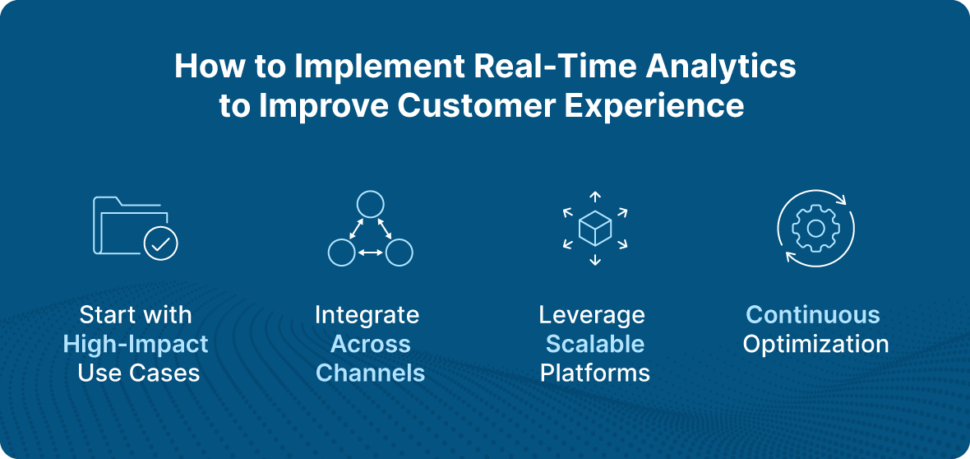
Retailers should start preparing now by investing in data infrastructure, upskilling their workforce, and experimenting with AI-powered tools. A phased approach is recommended, starting with small-scale pilot projects and gradually expanding as they gain experience and confidence. The future of retail personalization is here, and those who embrace AI will be best positioned to succeed.
- Audit your data storage to see if it can handle high-velocity streams from web and mobile apps.
- Hire data engineers who understand how to deploy models, not just build them in a vacuum.
- Develop a data governance framework: Establish policies and procedures for managing data privacy and security.
- Start small and experiment: Begin with pilot projects to test and refine your AI-powered personalization strategies.
No comments yet. Be the first to share your thoughts!