

Beyond Dashboards: The Shift in Business Intelligence
Traditional business intelligence (BI) tools like dashboards, reports, and KPIs have long been used to track business performance. However, these tools often only show what happened, not why, or what might happen next. This reactive approach struggles to keep up with evolving customer expectations.
The challenge lies not in the data itself, but in the speed and depth of insights needed. Static reports become outdated fast, and lagging indicators prevent timely action. Customers form opinions instantly based on every interaction, not after quarterly reports. Businesses must move from collecting data to truly understanding it.
AI-driven customer experience analytics mark a fundamental shift, moving from descriptive to predictive and prescriptive analytics. This means anticipating customer needs, proactively addressing pain points, and personalizing experiences at scale. CE 65 delivers real-time, actionable insights to help businesses build stronger customer relationships.
This goes beyond faster reporting; it augments human intelligence with AI. The platform identifies subtle patterns that human analysts might miss, turning them into opportunities for improvement.
CE 65’s AI Engine: Core Capabilities
CE 65's AI engine unlocks the potential within customer data. Natural language processing (NLP) analyzes unstructured data from reviews, surveys, and support tickets to gauge sentiment. This goes beyond simple positive/negative labels, identifying nuanced emotions and specific concerns.
Machine learning algorithms forecast customer behavior, predicting churn risk, estimating lifetime value, and identifying upsell/cross-sell opportunities. These predictions stem from complex algorithms trained on historical data and refined with new information. The platform provides probabilities, not definitive statements, to support informed decisions.
Anomaly detection monitors customer behavior, flagging unusual patterns that signal problems, such as a sudden drop in engagement, a spike in negative feedback, or a change in purchasing habits. This allows businesses to address issues before they escalate. For instance, a surge in support tickets for a specific feature could indicate a bug or usability problem.
CE 65 integrates with data sources like Salesforce CRM, Marketo marketing automation, and Google Analytics. This unified customer data view is essential for accurate analysis. A complete data picture leads to better insights.
Unlocking Customer Journey Insights
CE 65 maps and analyzes the complete customer journey, from awareness to post-purchase support. It identifies key touchpoints, understands motivations at each stage, and pinpoints friction points. The platform recognizes the complexity of modern customer interactions.
For a B2B software company, CE 65 tracks a lead’s journey from downloading a whitepaper to requesting a demo, engaging with sales, and becoming a customer. Analyzing data from each touchpoint reveals patterns, such as leads attending a specific webinar being 30% more likely to convert. This helps the company focus resources on promising leads.
The platform predicts next best actions. Based on a customer’s past behavior and current context, CE 65 recommends the most effective engagement methods, such as offering a personalized discount, providing helpful content, or connecting them with a sales representative.
CE 65 explains why events happened, not just what. By connecting dots across touchpoints, it provides a holistic customer experience view. This helps businesses identify root causes of satisfaction and dissatisfaction for data-driven improvements.
Automated Insights: From Data to Action
Traditional analytics often requires significant time and effort to extract meaningful insights. CE 65's automation features surface key findings to the right teams at the right time, reducing the workload on data analysts and enabling business users to make data-driven decisions.
Automated alerts notify teams of important changes, such as a drop in customer satisfaction, a surge in negative reviews, or a spike in churn risk. Alerts are customizable, allowing teams to focus on key metrics. For instance, a marketing team might be alerted to declining website traffic from a specific campaign.
Personalized recommendations offer actionable insights tailored to each user’s role. A sales manager might get recommendations on which accounts to prioritize, while a customer support manager might receive guidance on addressing common customer issues.
CE 65 supports AI-driven A/B testing, automatically identifying the most effective variations of marketing messages, website designs, and product features. The platform exports insights easily for use in existing systems.
Retail vs. B2B: Tailored Analytics
CE 65 recognizes that retail and B2B businesses have different customer experience analytics needs. The platform adapts its analysis to each sector's unique characteristics.
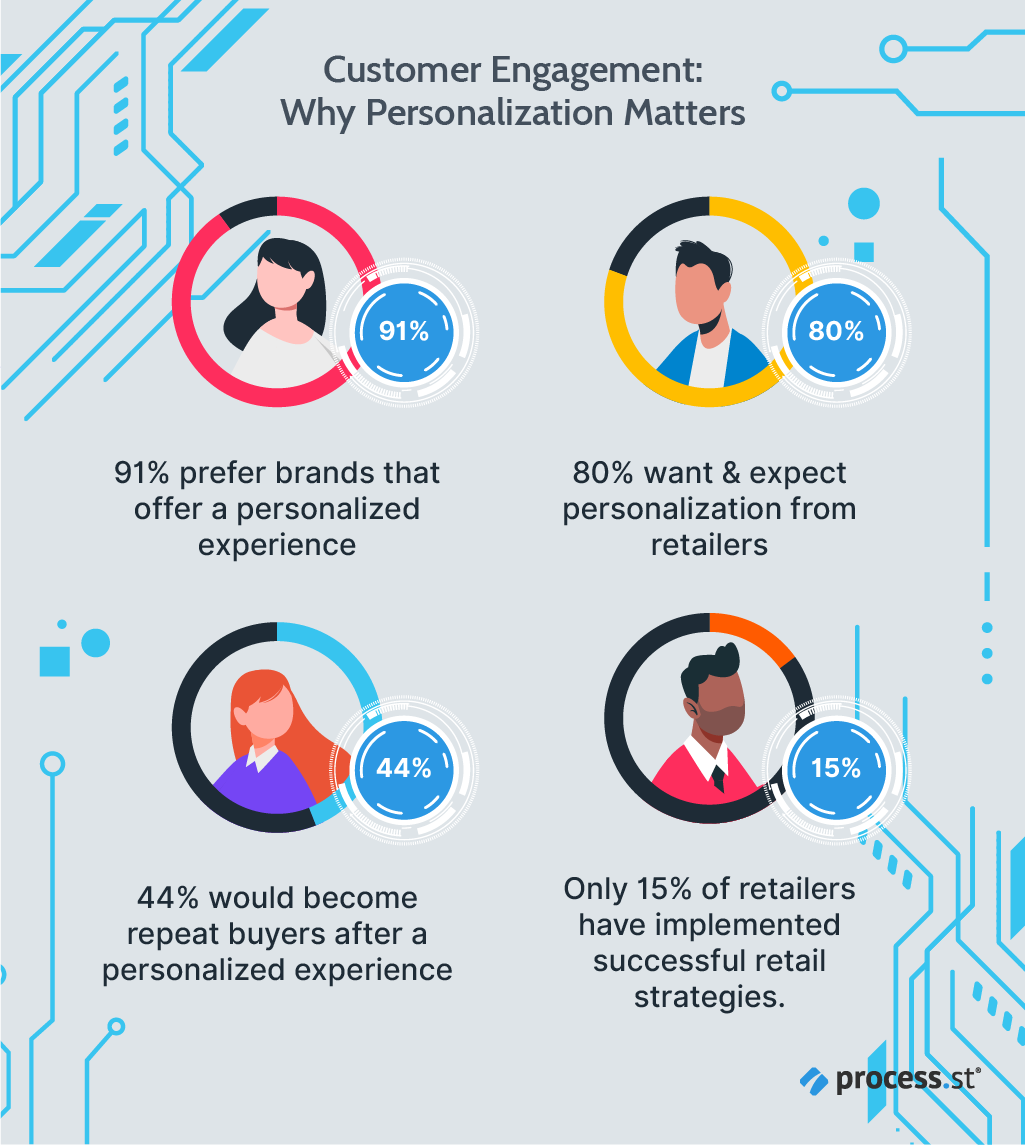
For retail
In contrast, B2B analytics emphasize account-based insights, lead scoring (prioritizing leads based on their likelihood to convert), and sales pipeline optimization. Identifying high-value accounts and understanding their specific needs is paramount. CE 65 can help B2B companies track engagement across multiple stakeholders within an organization.
Here’s a quick comparison: Retail focuses on individual transactions and immediate gratification, while B2B focuses on long-term relationships and complex decision-making processes. CE 65's flexibility allows it to cater to both.
- Retail Metrics: Average order value, conversion rate, customer lifetime value, in-store foot traffic.
- B2B Metrics: Account revenue, deal close rate, customer acquisition cost, sales cycle length.
Retail vs. B2B Customer Experience Analytics with CE 65
| Metric/Use Case | Retail Application | B2B Application | Data Sources |
|---|---|---|---|
| Customer Segmentation | Grouping customers based on purchasing behavior, demographics, and engagement with marketing campaigns to tailor offers and experiences. | Segmenting accounts based on industry, company size, revenue, and relationship stage to prioritize sales and service efforts. | Point-of-Sale (POS) data, website activity, mobile app usage, social media interactions, loyalty program data, customer surveys. |
| Personalization | Delivering personalized product recommendations, promotions, and content based on individual customer preferences and browsing history. | Providing tailored content, product information, and support resources based on account needs, industry, and key contacts within the organization. | Website behavior, purchase history, email engagement, in-store interactions, customer service interactions, account data (e.g., industry, size). |
| Churn Prediction | Identifying customers at risk of defection based on declining purchase frequency, reduced engagement, and negative feedback. | Predicting account churn based on decreasing engagement, lack of adoption of new features, and changes in key contacts. | Purchase frequency, recency of purchase, average order value, website login activity, support ticket volume, customer satisfaction scores, contract renewal dates. |
| Opportunity Identification | Discovering upselling and cross-selling opportunities based on customer purchase patterns and preferences. | Identifying opportunities to expand account spend by recommending additional products or services that align with their business needs. | Purchase history, browsing behavior, customer lifetime value, account growth potential, competitor analysis. |
| Campaign Optimization | Optimizing marketing campaigns by targeting specific customer segments with relevant messaging and offers, improving conversion rates. | Optimizing account-based marketing (ABM) campaigns by tailoring messaging and content to specific target accounts, increasing engagement and pipeline generation. | Campaign performance data (e.g., open rates, click-through rates, conversion rates), website traffic, lead scoring, sales data. |
Illustrative comparison based on the article research brief. Verify current pricing, limits, and product details in the official docs before relying on it.
The 2026 Outlook: AI and the Future of CX
Looking ahead to 2026, AI will play an even more central role in customer experience analytics. The increasing importance of data privacy will drive the adoption of privacy-enhancing technologies like federated learning and differential privacy. These technologies allow businesses to analyze data without compromising individual privacy.
The rise of generative AI will unlock new possibilities for personalization and content creation. Imagine AI automatically generating personalized product descriptions, email subject lines, or even entire marketing campaigns. However, this also introduces new challenges around authenticity and ethical considerations.
We anticipate even more personalized experiences, driven by a deeper understanding of individual customer preferences and behaviors. This will require businesses to integrate data from a wider range of sources and leverage more sophisticated AI algorithms. The ability to predict customer needs before they arise will be a key differentiator.
It’s important to be realistic. Data integration will remain a significant challenge, and ethical AI practices will be paramount. Building trust with customers will require transparency and accountability in how AI is used. The future of CX isn't just about technology; it's about building genuine relationships.
CE 65 in Action: Real-World Results
Let’s look at how CE 65 has delivered tangible results for its customers. A large online retailer, facing declining customer satisfaction scores, implemented CE 65 to analyze customer feedback from multiple sources – surveys, reviews, and social media. The platform identified a recurring theme: customers were frustrated with slow shipping times.
By leveraging CE 65’s anomaly detection capabilities, the retailer discovered that shipping delays were concentrated in a specific geographic region due to a logistical bottleneck. They were able to address the issue by rerouting shipments and partnering with a new logistics provider. Within three months, customer satisfaction scores increased by 15% and repeat purchase rates improved by 10%.
Another example is a B2B SaaS company that used CE 65 to improve its lead scoring process. By analyzing data on lead behavior, demographics, and firmographics, the platform identified a set of characteristics that correlated with high-value leads. They then adjusted their lead scoring model to prioritize these leads, resulting in a 20% increase in qualified leads and a 12% reduction in sales cycle length.
Finally, a financial services firm used CE 65 to proactively identify customers at risk of churn. The platform detected unusual patterns in customer activity – reduced account balances, decreased transaction frequency, and increased contact with customer support. They then reached out to these customers with personalized offers and support, successfully reducing churn by 8%.
No comments yet. Be the first to share your thoughts!