

Moving past reactive alerts
For a long time, customer experience analytics have largely been about looking in the rearview mirror. We’ve gotten very good at understanding what happened – which pages customers visited, what support tickets they filed, what products they bought. But that’s reactive. It tells you about problems after they’ve already impacted your business.
Predictive analytics is about spotting the moment a customer starts to pull away. Instead of looking at monthly trends, we look at individual journeys to intervene before the decision to leave is final.
Relying solely on historical data has limitations. Past behavior is a good indicator, certainly, but it doesn’t account for changing market conditions, competitor actions, or even individual life events that might influence a customer’s decision. A truly proactive approach demands we move beyond what was and focus on what will be.
I believe this evolution from reactive to predictive is no longer optional. Businesses that don't embrace these techniques will find themselves constantly playing catch-up, losing customers to competitors who are better at anticipating their needs.
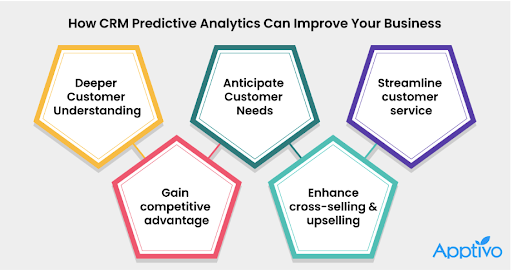
How we build the models
We use a mix of logistic regression, random forests, and gradient boosting. This isn't a single algorithm; we pick the model based on whether we need clear interpretability or raw accuracy for a specific dataset.
These models are trained on a comprehensive set of customer data. This includes not just demographic information and purchase history, but also website activity – pages viewed, time spent on site, products added to cart – and support interactions, analyzed for sentiment and resolution time. We also ingest data from marketing campaigns, tracking email opens, click-through rates, and offer redemption.
What sets CE 65 apart is our commitment to model customization. We don’t simply plug in a generic model and hope for the best. Our data science team works closely with each client to tailor the models to their specific business context, industry, and customer base. This ensures that the predictions are as accurate and relevant as possible.
The process involves feature engineering – selecting and transforming the most relevant data points – model training, and rigorous validation. We use techniques like cross-validation to prevent overfitting and ensure the model generalizes well to new data. This iterative process is key to maintaining high prediction accuracy over time.
Signals that suggest a customer is leaving
Churn rarely happens suddenly. It’s usually the result of a gradual decline in engagement and satisfaction. CE 65’s machine learning models are designed to detect these subtle signals, identifying customers who are drifting towards churn before they actually leave.
Consider a typical scenario: a customer who was once a frequent purchaser starts to reduce their purchase frequency. Simultaneously, their website engagement declines – they stop visiting key pages, spend less time browsing, and abandon items in their cart. Meanwhile, a recent interaction with customer support yielded a negative sentiment score, indicating dissatisfaction.
These seemingly isolated signals, when combined, paint a clear picture of a customer at risk. CE 65 also monitors for incomplete profile information – a customer who hasn’t provided essential details may be less invested in the relationship – and decreased feature usage within a product. A drop in usage of key features often signals waning value.
We also look for patterns in customer behavior that deviate from the norm. For example, a customer who typically contacts support via email suddenly switches to phone calls, which may indicate a more urgent or complex issue. Identifying these anomalies is crucial for proactive intervention.
Churn Indicator Predictive Power – 2026
| Indicator | Data Source | Predictive Power | Actionable Insight |
|---|---|---|---|
| Website Login Frequency | Web Analytics, CE 65 Platform | Medium | A significant drop in logins may indicate disengagement. Trigger personalized email campaigns or in-app messages offering assistance or showcasing new features. |
| Support Ticket Volume & Sentiment | CE 65 Support Integration, CRM Data | High | Increased ticket volume, especially with negative sentiment, is a strong churn predictor. Prioritize these customers for proactive support and issue resolution. |
| Purchase Frequency & Recency | Transaction Data, CE 65 Commerce Connector | High | Decreased purchase frequency and a long time since last purchase are key indicators. Implement targeted promotions or loyalty rewards to incentivize repeat business. |
| Feature Usage (Specific to Product) | CE 65 Product Analytics | Medium | Reduced usage of core product features suggests declining value perception. Offer training, highlight new functionalities, or gather feedback on usability. |
| Net Promoter Score (NPS) Trends | CE 65 Survey Integration | Medium | A declining NPS score signals growing dissatisfaction. Investigate the reasons behind the decline and address customer concerns. |
| Customer Health Score Changes | CE 65 Analytics Engine | High | A decreasing health score, calculated from multiple indicators, provides a consolidated view of churn risk. Initiate proactive engagement strategies. |
| Time Spent on Key Website Pages | Web Analytics, CE 65 Platform | Low | Reduced time spent on critical pages (e.g., pricing, documentation) might indicate confusion or lack of interest. Optimize content for clarity and relevance. |
Illustrative comparison based on the article research brief. Verify current pricing, limits, and product details in the official docs before relying on it.
Automated ways to step in
Predicting churn is only half the battle. The real value lies in taking action to prevent it. CE 65 translates predicted churn risk into automated intervention strategies, designed to re-engage customers and address their concerns. We recognize that a generic "save the customer" email blast is rarely effective.
Instead, we advocate for highly targeted and personalized interventions. For example, a customer identified as being at risk due to declining website engagement might receive an email with personalized product recommendations based on their past purchases and browsing history. Or, a proactive chat invitation offering assistance with a specific issue they might be facing.
CE 65 allows for A/B testing of different intervention strategies. You can test different email subject lines, offer values, or chat scripts to determine which approaches are most effective at preventing churn. This data-driven approach ensures that your interventions are constantly optimized for maximum impact.
For high-risk customers, CE 65 can automatically assign them to dedicated support agents who are empowered to provide personalized attention and resolve any outstanding issues. This human touch can be particularly valuable in preventing churn. The system also integrates with marketing automation platforms to trigger automated workflows based on churn risk scores.
The system isn't about blindly sending offers. It’s about understanding why a customer is at risk and delivering a relevant solution. A customer complaining about a specific product defect needs a different response than one who simply hasn't engaged in a while.
Real-time prediction in 2026
We're constantly pushing the boundaries of what's possible with predictive customer experience analytics. Looking ahead to 2026, our roadmap is focused on real-time churn prediction – moving beyond lagging indicators to anticipate churn before it’s even visible in historical data.
This requires leveraging streaming data sources – real-time website activity, social media feeds, and in-app behavior – and employing edge computing to process data closer to the source. The goal is to identify at-risk customers in the moment, allowing for immediate intervention.
Imagine a scenario where a customer is struggling to complete a purchase on your website. A real-time churn prediction model could detect this frustration and trigger a proactive chat invitation offering assistance, preventing the customer from abandoning their cart and potentially churning.
I'm not sure about precise timelines for all these developments, but the direction is clear: towards a more proactive, personalized, and data-driven approach to customer experience management. The ability to predict and prevent churn in real-time will be a significant competitive advantage.
Connecting to your current tools
CE 65 connects to the tools you already use. We built it to work with existing stacks so you don't have to rebuild your data pipeline from scratch.
CE 65 offers pre-built connectors for popular CRM systems like Salesforce, marketing automation platforms like Marketo and HubSpot, and data warehouses like Snowflake and Amazon Redshift. These connectors simplify the process of data ingestion and ensure that CE 65 can access the information it needs to generate accurate predictions.
Furthermore, CE 65 features a robust API-first architecture. This allows you to build custom integrations with any system that supports API connectivity. We provide comprehensive documentation and support to help you get up and running quickly.
We aim to minimize disruption and ensure that adopting CE 65 doesn’t require a complete overhaul of your infrastructure. The goal is to augment your existing systems, not replace them.
No comments yet. Be the first to share your thoughts!