

Personalization is more than a name tag
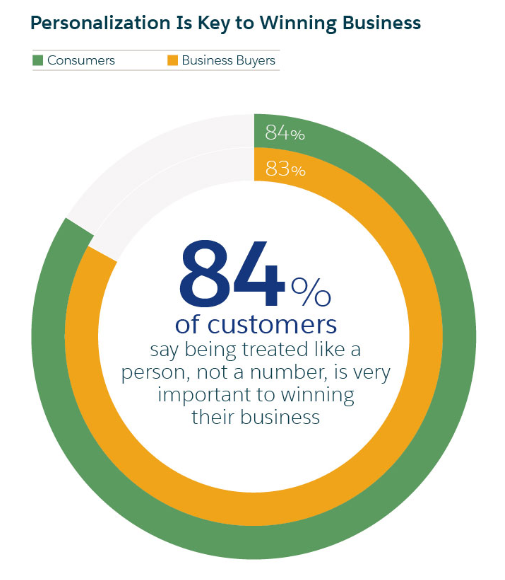
B2B personalization isn’t simply inserting a company name into a generic email template. It's a fundamental shift in how we approach business relationships, demanding a deep understanding of complex buying units, the individual roles within them, and their unique, often evolving needs. The old ways – broad industry messaging and reliance on gut feeling – are increasingly ineffective. According to research from Oracle, the B2B buying experience has become markedly more digital, emotional, real-time, and social, mirroring trends seen in B2C.
We’ve seen a move away from viewing Account-Based Marketing (ABM) as a strategy in itself, and towards ABM as a means to deliver account-based experiences. This is a crucial distinction. It’s not enough to identify target accounts; you have to tailor every interaction to resonate with the specific people driving the decision-making process within those accounts. This requires a data-driven approach, one that is powered by machine learning and capable of handling the complexity of B2B relationships.
The challenge is that B2B buyers are no longer solely reliant on sales reps for information. They are conducting their own research, consuming content independently, and forming opinions long before engaging with a sales team. This means personalization must extend beyond sales outreach to encompass the entire customer journey – from initial awareness to post-sale support. Ignoring this shift is a guaranteed path to lost opportunities and diminished returns.
Unifying your data signals
Effective B2B personalization hinges on a robust data foundation. This isn't about collecting more data, it's about unifying the data you already have. Crucially, you need to integrate first-party data – insights from your website behavior tracking, CRM systems like Salesforce or HubSpot, and direct sales interactions – with second-party data, which might come from strategic partners, and third-party data, such as intent data from providers like Bombora and firmographic information from Dun & Bradstreet.
The biggest hurdle is often breaking down data silos. Marketing, sales, and customer success teams often operate with their own disconnected data sets. Creating a single customer view – a comprehensive profile of each account and its key stakeholders – is essential. This endeavor isn’t without its challenges; data quality is paramount. Inaccurate or incomplete data can lead to misdirected personalization efforts and erode trust.
CE 65 addresses this challenge by offering tools to integrate these disparate data sources and cleanse the resulting data. We focus on creating a unified profile that represents the complete picture of your customers, enabling a more informed and effective personalization strategy. Robust data governance policies are vital, and CE 65 helps you establish those as well.
- First-party data like website clicks and CRM notes
- Second-Party Data: Partner insights, co-marketing data
- Third-Party Data: Intent signals, firmographic details
Data Integration Methods for B2B CX Personalization
| Method | Cost | Complexity | Scalability | Real-time Capability |
|---|---|---|---|---|
| ETL (Extract, Transform, Load) | Generally Lower upfront | Moderate – requires significant transformation logic | Good, but can become a bottleneck with large volumes | Batch-oriented, limited real-time support |
| ELT (Extract, Load, Transform) | Potentially Higher initial investment | Moderate – transformation happens within the data warehouse | Excellent – leverages data warehouse scalability | Better for near real-time, depending on warehouse capabilities |
| Data Virtualization | Moderate – licensing costs can accumulate | Higher – requires abstracting data sources and defining views | Good – can scale with underlying data sources | Good – provides access to real-time data without replication |
| Customer Data Platform (CDP) | Higher – often subscription-based | Moderate to High – depends on integrations and data modeling | Excellent – designed for large-scale customer data | Good – often includes real-time data ingestion and activation |
| ETL vs ELT | ETL: Lower cost for smaller datasets. ELT: Lower cost for large datasets | ETL: More complex transformation rules. ELT: Simpler transformation rules | ETL: Scalability limited by ETL server. ELT: Scalability limited by data warehouse | ETL: Batch processing. ELT: Near real-time processing |
| Data Virtualization vs CDP | Data Virtualization: Lower cost for accessing existing data. CDP: Higher cost with data storage and processing | Data Virtualization: Higher complexity for data modeling. CDP: Lower complexity with pre-built integrations | Data Virtualization: Scalability depends on source systems. CDP: Scalability designed for customer data | Data Virtualization: Real-time access to source data. CDP: Real-time data ingestion and activation |
Qualitative comparison based on the article research brief. Confirm current product details in the official docs before making implementation choices.
How our machine learning engine works
CE 65 leverages machine learning to move beyond basic personalization and deliver truly relevant experiences. We employ techniques like collaborative filtering – identifying accounts with similar characteristics and recommending content based on their engagement – and content-based filtering, which suggests content tailored to an account's specific profile and interests. These aren’t just theoretical concepts; they translate into tangible improvements in lead scoring and engagement.
Predictive modeling is another key component. We analyze historical data to identify accounts that are most likely to convert, allowing sales teams to prioritize their efforts. For example, our models can predict which accounts are actively researching solutions like yours, based on their online behavior and content consumption. The goal isn't to replace human judgment, but to augment it with data-driven insights.
New accounts often have no history—the 'cold start' problem. We use industry benchmarks to start personalizing immediately, then let the system refine its approach as it sees more behavior. The math gets better the more you use it, leading to higher revenue without the manual guesswork.
Moving past basic firmographics
Traditional account segmentation often relies on basic firmographics – industry, company size, geographic location. While these factors are still relevant, CE 65 takes segmentation to a much deeper level by incorporating behavioral data and intent signals. This allows us to identify key personas within accounts, map the buying center, and understand the unique needs of each stakeholder.
For example, within a large enterprise, the CFO will have very different priorities and concerns than the head of IT. CE 65 helps you identify these key players and tailor messaging accordingly. We map the relationships between individuals within an organization, revealing who influences whom. This is where the platform truly shines – moving from broad segments to hyper-personalized experiences.
Consider a software company targeting a large healthcare provider. Using CE 65, they identified that the Chief Medical Officer was actively researching telehealth solutions. They then delivered a personalized case study highlighting how their platform improved patient outcomes at a similar hospital. This targeted approach resulted in a meeting with the CMO and ultimately a significant deal. This is the power of understanding the individual within the account.
- First, we find the specific people inside your target accounts.
- Step 2: Map the buying center and stakeholder relationships.
- Step 3: Understand individual needs and pain points.
- Step 4: Deliver tailored content and experiences.
Delivering content where it lands
CE 65 enables personalized content delivery across all key B2B channels: email, website, social media, and sales enablement tools. We support dynamic content, which adapts based on the viewer’s profile, personalized landing pages that address specific pain points, and targeted advertising campaigns that reach the right stakeholders with the right message. The emphasis is on creating a consistent and relevant experience at every touchpoint.
For example, a sales rep using CE 65 can access a personalized dashboard for each account, providing them with insights into the account’s challenges, key decision-makers, and recent engagement history. This allows them to have more informed and productive conversations. We also integrate with popular sales enablement platforms, ensuring that sales teams have access to the right content at the right time.
A/B testing and continuous optimization are crucial. CE 65 provides the tools to experiment with different content variations, messaging styles, and channel strategies. We also fully support ABM initiatives, helping you align marketing and sales efforts to deliver a cohesive and personalized experience to your target accounts.
Measuring what actually matters
Measuring the impact of B2B personalization requires a focus on key metrics that demonstrate business value. These include conversion rates, deal size, sales cycle length, customer lifetime value, and marketing qualified leads (MQLs). It’s important to move beyond vanity metrics and focus on metrics that directly correlate with revenue growth.
Attribution modeling is also essential. Understanding which personalization efforts contributed to a closed deal can be challenging, but CE 65 provides tools to track the impact of your initiatives. We offer multi-touch attribution models that give you a more holistic view of the customer journey. It’s important to be realistic about the challenges of measuring ROI in B2B – it’s rarely a simple equation.
CE 65's analytics dashboards provide actionable insights, allowing you to identify what’s working and what’s not. We focus on incremental improvements and continuous optimization. While proving a direct causal link between personalization and revenue can be difficult, the data consistently shows that personalized experiences lead to higher engagement, increased lead quality, and ultimately, more closed deals.
- Key Metrics: Conversion rates, deal size, sales cycle length, customer lifetime value, MQLs
- Attribution Modeling: Multi-touch attribution for a holistic view
- Actionable Insights: CE 65 dashboards for continuous optimization


No comments yet. Be the first to share your thoughts!